Level 3, Dawson House
The Park Centre for Mental Health Treatment
Research and Education, Wacol, QLD 4076
P: +61 7 3271 8660

Latest News

Integrating education with mental health support is creating positive outcomes for young people in Queensland
For some young people, Adolescent Day Programs provide their first positive experience of the mental health system. The statewide initiative helps adolescents continue their education while living with a severe mental illness. Our Mental Health Evaluation team assessed program operations at six sites and made several recommendations to help improve cross-agency collaboration and service delivery.
Adolescent Day Programs support young people aged 13-18 years who have been unable to attend mainstream schooling due severe, complex and persistent mental health concerns. Health professionals, peer workers, educators and guidance counsellors support the young person’s mental health journey and help them transition back into schools, training programs or universities.
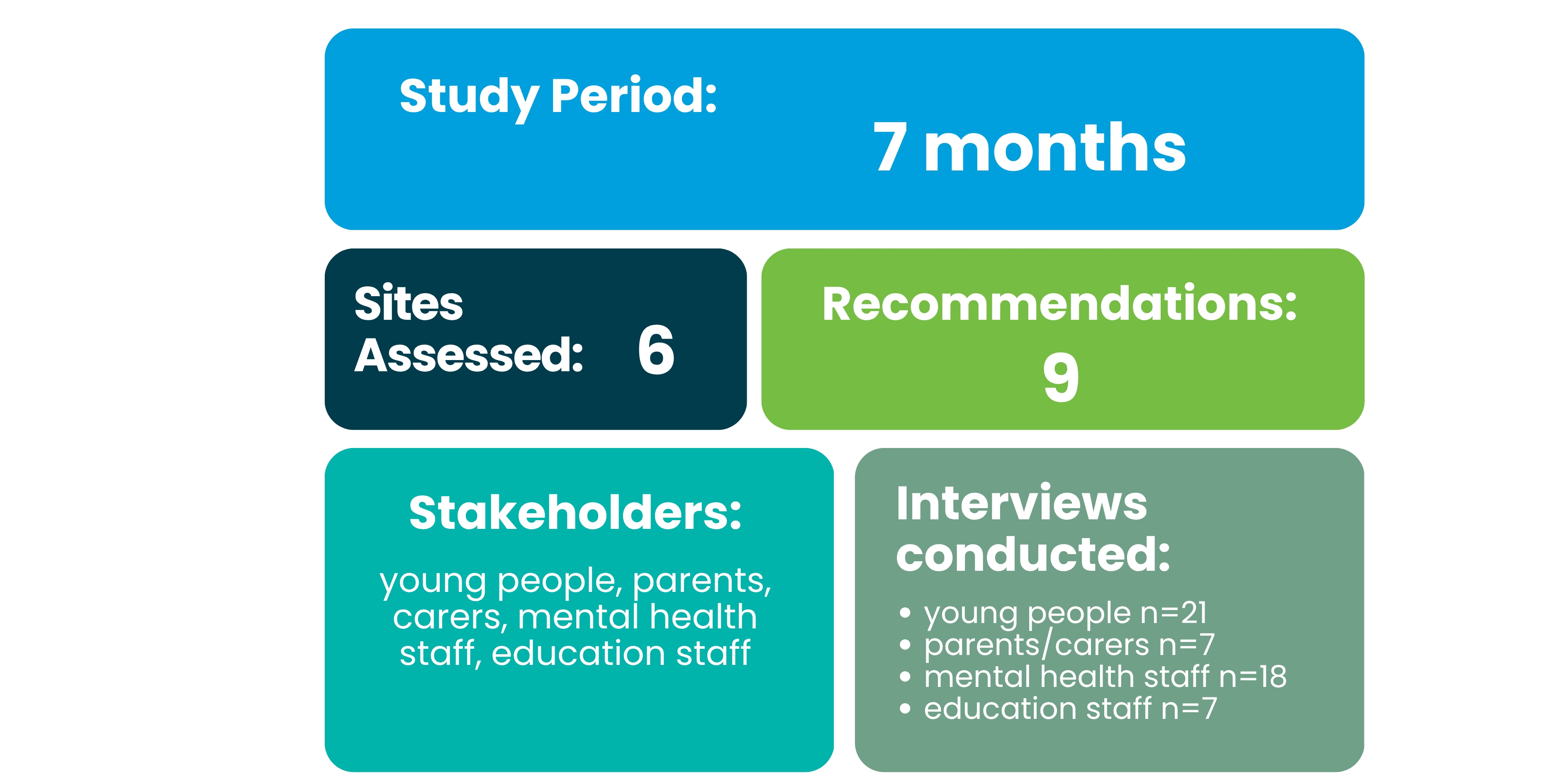
In 2023, our Mental Health Evaluation Research team were invited to review the Adolescent Day Programs in Townsville, Toowoomba, Chermside, South Brisbane, Logan and the Gold Coast.
Associate Professor Zoe Rutherford says their objectives included reviewing the model of service, and identifying areas of risk and opportunities for improvement.
"The programs support the psychosocial, wellbeing and holistic health of young people who've had an extended period away from school," Associate Professor Rutherford says.
"Our researchers linked education and health data to understand how the programs impacted the health and academic achievements of consumers."
The team also conducted interviews with parents, carers and young people to understand their experiences and perspectives.
Associate Professor Rutherford says some consumers had their first positive experience with a mental health system when they interacted with the program.
"I did not want to come here at all. I was really sceptical...It kind of felt like I'd tried everything...I'd tried every type of therapy...every medication...I was just like no, there is no way this is going to help...but it did." (Male, 16 years)
"We found that having a multidisciplinary team who could develop a thorough understanding of the young person contributed to these positive experiences. This meant they didn't have to retell their story over and over again — we know that can become retraumatising," Associate Professor Rutherford says.
Recommendations to strengthen the model of care
The final report included a series of recommendations to improve cross-agency cooperation and information sharing. Researchers found services could be connected more effectively to further support data collection, resourcing and other functions.
"We know that integration and coordination across school and mental health systems to better respond to the needs of children, young people and their families is a key priority both in Queensland and nationally. Our findings provide early evidence and tangible guidance for this across Adolescent Day Programs in Queensland," Associate Professor Rutherford says.
"We recommended strengthening collaborative governance between the Department of Health and Department of Education, and establishing a project advisory board. These recommendations have already been used to inform a draft project plan which aims to revise the integrated model of care across the state."
Established in 1987, QCMHR is funded by Queensland Health to work state-wide and contribute to the local, national, and global research efforts to improve mental health.
Funded by
The Queensland Department of Health and the Department of Education.
HEAD OFFICE

ACKNOWLEDGEMENT OF COUNTRY
The Queensland Centre for Mental Health Research (QCMHR) acknowledges the Jagera, Yuggera, Ugarapul and Turrbal people as the Traditional Owners of the land on which QCMHR operates and their continuing connections to land, waters and community. We pay our respects to their Elders, past and present and stand together with all Aboriginal and Torres Strait Islander peoples.
RECOGNITION OF LIVED EXPERIENCE
We acknowledge people in our communities with lived experience of mental health, drug and alcohol concerns and those who care for them. We respect and value their generous contributions to our research.