Level 3, Dawson House
The Park Centre for Mental Health Treatment
Research and Education, Wacol, QLD 4076
P: +61 7 3271 8660

Latest News
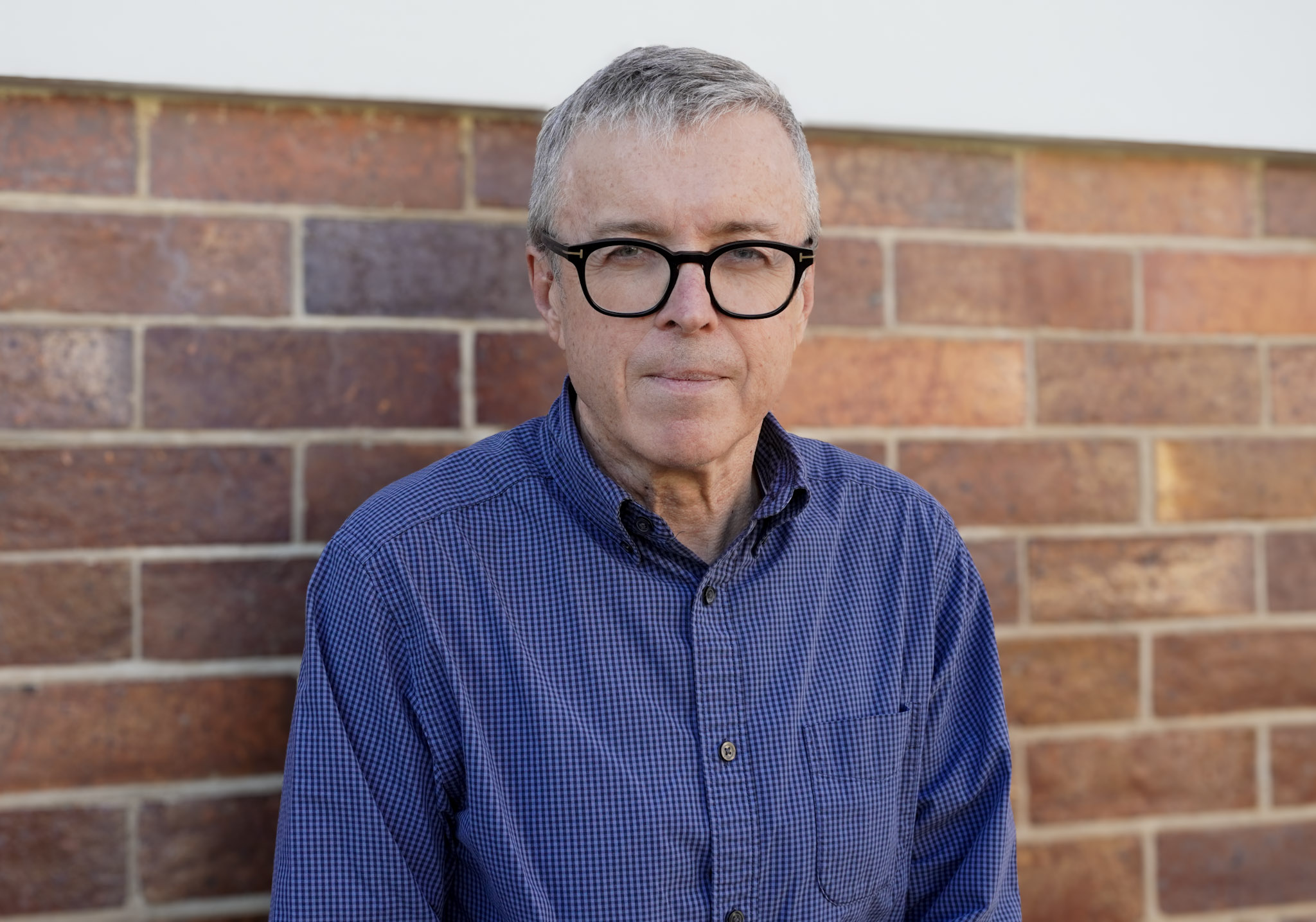
A Pioneer for Mental Health Research. Celebrating Professor John McGrath's Extraordinary Career
With an impressive career spanning more than four decades, Professor John McGrath has shown a remarkable dedication to improving the lives of people with schizophrenia and other mental illnesses.
From his earliest days as a medical student working nights in a psychiatric hospital, Professor McGrath was drawn to psychiatry. He was later appointed as the Director of the Clinical Studies Unit (CSU), helping it grow from a small inpatient unit into an internationally recognised institution, now known as the Queensland Centre for Mental Health Research (QCMHR). Professor McGrath retired from QCMHR in mid-2025, leaving behind a legacy of outstanding contributions to mental health research in Australia and overseas.
Professor McGrath discovered his passion for psychiatry while he was studying medicine at The University of Queensland. Night shifts as an assistant nursing orderly in a mental hospital also provided valuable insights as he spent time with staff and patients on locked wards.
"Even as a medical student, I was interested in the brain and always did research projects on mental health," he says.
"I remember getting this journal out of the university library called the Schizophrenia Bulletin," he says. "It was a beautiful journal and had artwork by people with a serious mental illness on the cover. It also included stories by people with schizophrenia about what it was like for them."
"It opened my eyes to how disabling serious mental disorders like schizophrenia were, and how much more work was needed to find ways to prevent and treat this poorly understood group of disorders."
When Professor McGrath began his psychiatry training in 1982, he immediately knew he was on the right path.
"I loved it," he says. "There was no turning back and I was thrilled to study it. When you have a job you like, it's not work, it's a passion. It was a pleasure to do it."
A new role in the Clinical Studies Unit (CSU)
In 1988, Professor McGrath was invited to join the newly established CSU at Wolston Park. He took over as Director two years later.
The 26-bed inpatient unit was initially staffed by around 30 people including nurses, administrative staff, psychologists, data analysts and statisticians.
It was a busy time as he juggled the new role, a young family and completed his PhD.
"I think I was drawn to the challenge of a very tough area of research," he says.
"There was also a great need with patients, caregivers, doctors and clinical staff all asking for better treatments."
The CSU team focused on investigator-initiated and industry-sponsored clinical trials, and were involved in improving some of the early treatments for schizophrenia.
By 1996, the organisation had shifted its focus and the inpatient unit was closed.
"It was a critical defining point for our organisation," Professor McGrath says. "We began building new skills in psychology and wet bench neuroscience, and a wide range of other new projects."
In the following decades, the CSU became QCMHR and five of its staff would be awarded high-cite status. This placed them in the top one percent of researchers whose work is commonly referenced by others and subsequently helped shape how an entire field thinks, measures and responds to mental health problems.
"Many of the highly productive and highly cited researchers in our group came to us as 'baby researchers' doing their PhDs with us, and now they're rockstars. I'm really proud of that," Professor McGrath says.
"That didn't happen by chance. We built up the machinery that allowed people to excel. We got staff who loved their jobs and were really motivated. They worked so hard. We also had a senior leadership group who knew what they were doing and took it very seriously."
Professor McGrath is also recognised as one of the world's highest cited researchers.
Clozapine transforms treatment
In the late 1990s, CSU researchers were the second mental health team in Australia to explore if clozapine could be safely reintroduced to treat people with schizophrenia.
"The existing drugs weren't fully effective, not everyone would respond and they had dreadful side effects including stiffness and muscle shaking. People would sometimes relapse as well," Professor McGrath says.
"We had one of the first patients in Australia placed onto clozapine and they responded brilliantly.
"Now, it's widely used and is the most effective treatment for schizophrenia, even though it still has a lot of side effects."
National recognition and a prestigious fellowship
Professor McGrath was awarded a Member of the Order of Australia for his services in the field of schizophrenia research in 2007. This was followed by a prestigious fellowship six years later.
The five-year John Cade Fellowship from the National Health and Medical Research Council was used to establish a new team with a focus on clinical trials of medications and other interventions. The team was spear-headed by nurse, Andrea Baker.
"It's now one of the most productive groups in the QCMHR," Professor McGrath says. "It's self-funded and we've built up huge skill sets."
In the same year, he was invited to be the Associate Editor for the Schizophrenia Bulletin.
"It was a flashback moment to when I was a student in that dusty library, getting that journal down in the 1970s."
Vitamin D and the brain
Professor McGrath's research was primarily focused on epidemiology and the numbers, causes and effects of illnesses in certain populations.
"We started looking at season of birth because if you're born in winter or spring you have a slightly increased risk of getting schizophrenia. We thought it could be viruses or influenza. Then I had this 'Aha!' moment. I remember it vividly. I thought it could be early life low Vitamin D as well. Someone had said that once or twice before...but no one had done the necessary research to reject the hypothesis."
A joint experiment with his colleague, Allan Mackay Sim (who was interested in spinal repair) found the removal of Vitamin D from young rats made their brains develop differently and they also demonstrated different behaviours.
"I nearly fell off my chair. We'd discovered that Vitamin D was not only important for healthy bones – it was also important to build healthy brains."
The Danish connection
In 2016, Professor McGrath was awarded the $6M Niels Bohr Professorship from the Danish National Research Foundation. This provided an opportunity to further his research into the role of Vitamin D in schizophrenia.
Researchers had access to all the samples from newborn bloodspot screening tests taken in Denmark over several decades.
This biobank provided a large collection of neonatal blood data and the resulting studies confirmed low neonatal Vitamin D levels were associated with an increased risk of not only schizophrenia, but also autism and attention deficit hyperactivity disorder (ADHD).
"These findings lent weight to our hypothesis that early life vitamin D status influenced brain development," Professor McGrath says.
"The professorship really allowed me to do some of my best research."
A new era begins
Professor McGrath's commitment to research excellence and his leadership has played a central role in establishing the QCMHR (as it's now known) as a world-leading research institution.
He retired in June 2025 and, although he continues some project work, his focus has turned to more relaxing interests like gardening and tending to his property in Maleny.
"I'm really happy with my research career and content to see that QCMHR has built capacity in mental health research. We have talented people with the skills to guide QCMHR over the next few years," he says.
On behalf of everyone at QCMHR, we wish Professor McGrath well and thank him for his incredible contributions to mental health research.
HEAD OFFICE

ACKNOWLEDGEMENT OF COUNTRY
The Queensland Centre for Mental Health Research (QCMHR) acknowledges the Jagera, Yuggera, Ugarapul and Turrbal people as the Traditional Owners of the land on which QCMHR operates and their continuing connections to land, waters and community. We pay our respects to their Elders, past and present and stand together with all Aboriginal and Torres Strait Islander peoples.
RECOGNITION OF LIVED EXPERIENCE
We acknowledge people in our communities with lived experience of mental health, drug and alcohol concerns and those who care for them. We respect and value their generous contributions to our research.